The Warehouse Framework by Alexandru Valentin Sirbu
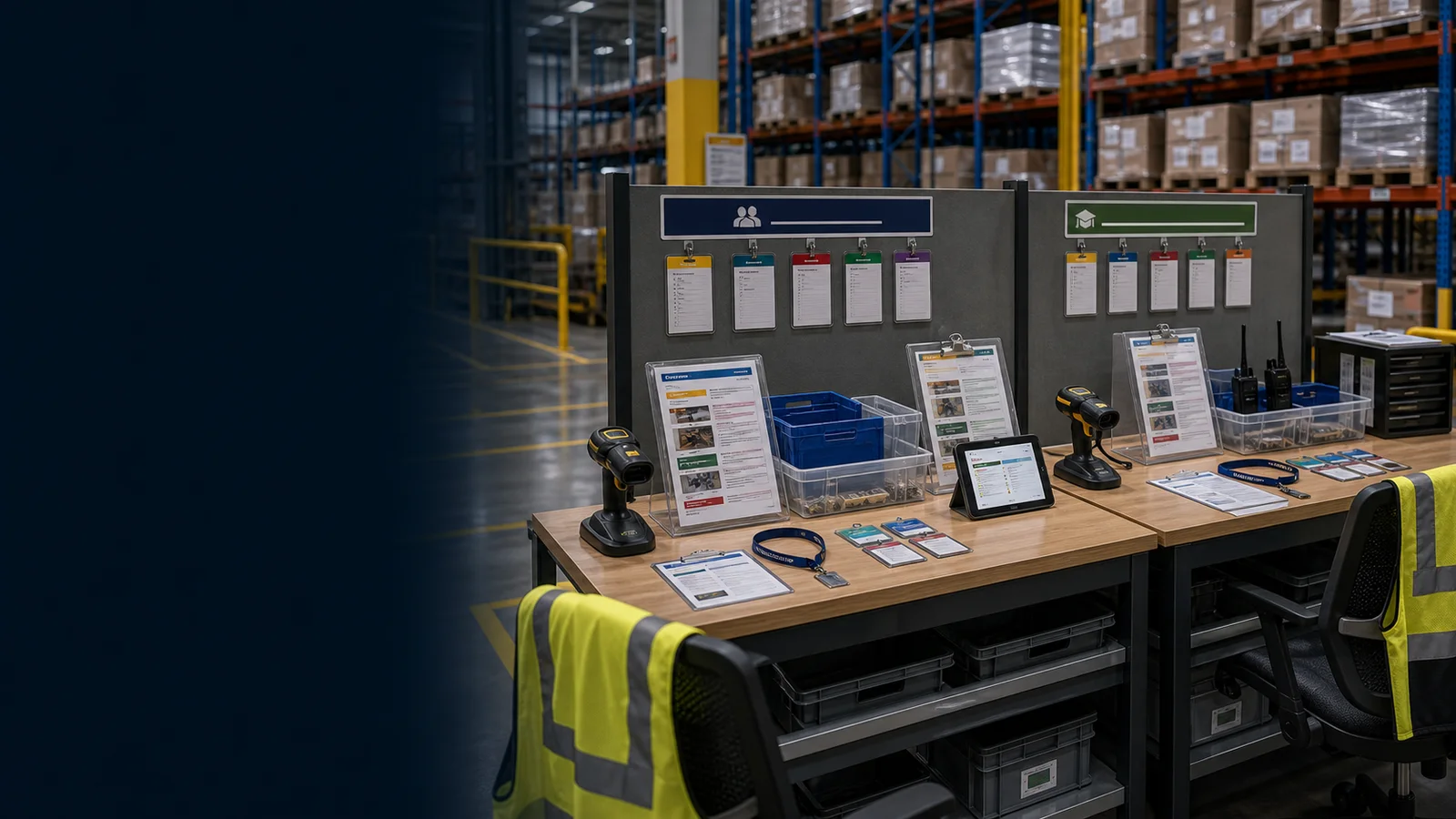
Peer-Mentored Skill Sharing warehouse framework photo

Framework

Peer-Mentored Skill Sharing

Build a sustainable peer-to-peer learning system where experienced workers mentor others on specialized tasks (e.g., inventory checks, WMS workflows, returns processing, dock operations). Use short, focused sessions, clear pairing rules, visible outcomes, and ongoing assessment to grow capability across shifts.

Overview

What this framework standardizes

Peer-Mentored Skill Sharing is designed for warehouse teams that need a clear operating method, not just a theoretical document. It explains what supervisors, team leaders, operators, and support functions should look for on the floor, how to convert observations into action, and how to keep the standard alive after the first rollout.

The page focuses on Worker Skill Mapping, Assess Learning Needs, Rotate Mentors, Empower Mentors, Harmonize Training with Ops, Optimize Pairings. These topics help teams align language, reduce variation, and build a repeatable routine that can be audited, trained, and improved over time.

Use this framework as a working reference during shift meetings, Gemba walks, onboarding, improvement workshops, SOP reviews, and daily performance follow-up. The goal is to make the right behavior visible, simple, and repeatable.

6Focus areas
54Floor checks
4Rollout phases

Framework Detail

Operating pillars and practical checks

Each pillar combines a clear intent with practical checks. Use the intent paragraph to explain the standard, then use the checks as audit points, training prompts, or action-plan inputs.

W

Pillar 1

Worker Skill Mapping

Identify mentors by task expertise and availability across shifts.

  • List core tasks (e.g., cycle count, WMS putaway, returns triage, dock check-in)

  • Collect self-assessed skills + supervisor validation per employee

  • Tag mentors by task, shift, language, and certifications

  • Record “can teach” vs. “can do” to filter true mentors

  • Publish a simple skill matrix view for leads

  • Refresh mapping monthly or when roles change

A

Pillar 2

Assess Learning Needs

Quantify skill gaps to target where mentoring adds value.

  • Survey teams for confidence per task (1–5) and pain points

  • Pull error trends/dwell by task to locate coaching hotspots

  • Prioritize gaps that affect service/safety first

  • Define proficiency levels (Observer → Assisted → Solo → Mentor)

  • Create learner shortlists per area and shift

  • Gain lead approval for focus areas this month

R

Pillar 3

Rotate Mentors

Schedule short, weekly sessions; avoid overloading top performers.

  • Pair mentors/learners for 60–90 min weekly sessions

  • Cap active mentees per mentor (e.g., max 2 at once)

  • Rotate topics every 2–3 weeks to build breadth

  • Allow shadow → co-pilot → solo progression per mentee

  • Protect mentoring time in the shift plan

  • Record attendance and quick outcomes after each session

E

Pillar 4

Empower Mentors

Give mentors ready-to-use micro-curricula and simple tools.

  • Provide 15–30 min lesson outlines per task with success criteria

  • Offer job aids (screenshots, job aids, short videos) at point-of-use

  • Create a quick feedback template (what worked/what to adjust)

  • Enable mentors to log observed risks and propose fixes

  • Recognize mentors in team huddles and performance reviews

  • Ensure leads can view mentoring progress dashboards

H

Pillar 5

Harmonize Training with Ops

Align mentoring with throughput, safety, and quality goals.

  • Schedule sessions outside peak waves/cutoffs

  • Include a 60-second safety brief at the start of each session

  • Tie topics to current operational priorities (e.g., returns backlog)

  • Coordinate with maintenance/IT for tool availability

  • Define “stop criteria” to pause mentoring during incidents

  • Sync with daily stand-up so actions flow into the plan

O

Pillar 6

Optimize Pairings

Match by task relevance, shift overlap, language, and learning style.

  • Prefer same-area pairings to maximize practice reps

  • Consider language/communication fit for clarity

  • Balance seniority to avoid dependency on one guru

  • Use recent error data to match mentors skilled in those fixes

  • Swap pairings if no progress after 2 sessions

  • Re-match when learners reach “Solo” level

U

Pillar 7

Upskill Mentors

Teach mentors how to teach — concise, hands-on, and safe.

  • Run a “train-the-trainer” micro-course (explain → demo → do → feedback)

  • Practice giving specific, behavior-based feedback

  • Cover adult learning basics: chunking, repetition, confidence building

  • Coach on inclusive communication and psychological safety

  • Certify mentors annually; recertify when processes change

  • Shadow new mentors for their first two sessions

S

Pillar 8

Standardize Mentoring

Document protocols so sessions are consistent and auditable.

  • Publish a one-page SOP: objectives, roles, flow, timebox

  • Use a consistent mentoring log: topic, level, outcome, next step

  • Store job aids and session templates in a shared repository

  • Define escalation path for safety/quality concerns found in sessions

  • Clarify criteria to move from Assisted → Solo → Mentor

  • Review SOP quarterly with leads and mentors

E

Pillar 9

Evaluate Skill Growth

Measure proficiency gains and operational impact.

  • Track progression per learner across proficiency levels

  • Measure effect on defects, dwell, and rework in mentored tasks

  • Survey learners/mentors monthly for satisfaction and blockers

  • Spotlight success stories and replicate in other areas

  • Adjust pairing rules and curricula based on outcomes

  • Publish a simple monthly result: #mentored, % to Solo, impact highlights

Implementation

How to implement this framework without creating another unused document

01

Diagnose

Understand the current condition

Compare the current warehouse process with the Peer-Mentored Skill Sharing standard. Look for unclear ownership, missing visual controls, repeated questions, rework, waiting time, safety exposure, and places where teams rely on memory instead of a visible rule.

02

Design

Translate the framework into local rules

Turn the guidance into simple local standards: who owns the routine, when it is checked, which evidence is required, and what escalation path is used when the expected condition is not met.

03

Deploy

Train, test, and improve on the floor

Pilot the standard in one area first. Train the team with examples, gather feedback, remove friction, and then expand once the routine works under real workload pressure.

04

Sustain

Review results and prevent drift

Add the topic to daily or weekly management cadence. Track open actions, check whether the standard is still visible, and update SOPs, work instructions, or visual controls when the operation changes.

FAQ

Common questions about Peer-Mentored Skill Sharing

What is Peer-Mentored Skill Sharing?

Build a sustainable peer-to-peer learning system where experienced workers mentor others on specialized tasks (e.g., inventory checks, WMS workflows, returns processing, dock operations). Use short, focused sessions, clear pairing rules, visible outcomes, and ongoing assessment to grow capability across shifts.

How should a warehouse team use Peer-Mentored Skill Sharing?

Start with a short review of the current process, select one pilot area, apply the relevant checks, and assign owners for every gap. The page works best when it is used during real floor observation, not only as office documentation.

Why is Peer-Mentored Skill Sharing important for warehouse operations?

It reduces ambiguity and makes execution more consistent. A clear framework helps teams train faster, detect abnormal conditions earlier, and protect improvements from disappearing after volume, staffing, or layout changes.

How often should Peer-Mentored Skill Sharing be reviewed?

Review it during implementation, then include the key points in daily or weekly leadership routines. A deeper review should happen after incidents, layout changes, SOP updates, audit findings, or repeated performance issues.

Created by

Alexandru Valentin Sirbu