The Warehouse Framework by Alexandru Valentin Sirbu
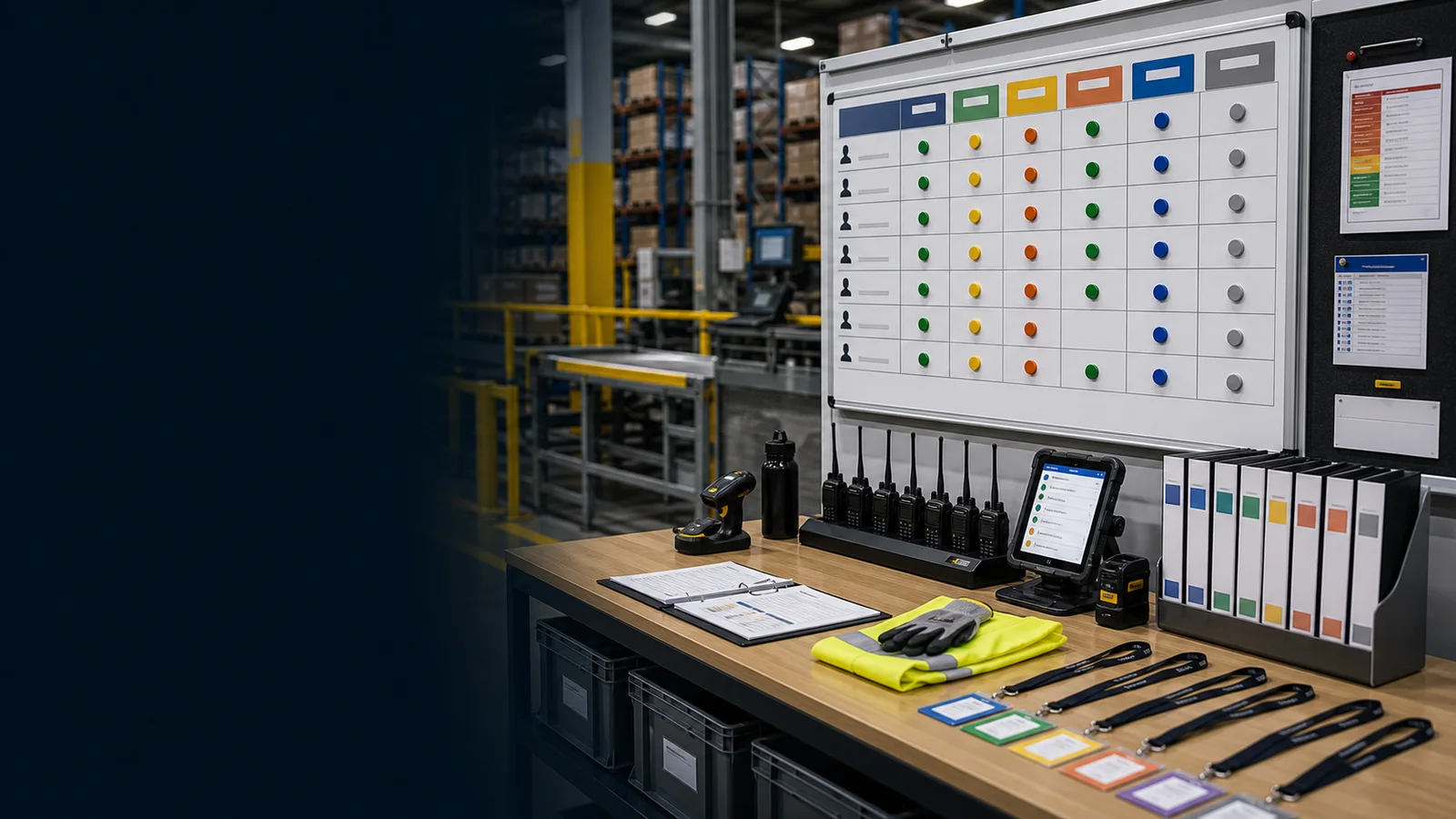
Cross-Department Training Framework warehouse framework photo

Framework

Cross-Department Training Framework

Inter & internal cross-department training: nine pillars, deep checks, notes, and progress. Export to Markdown/JSON or print when done.

Overview

What this framework standardizes

Cross-Department Training Framework is designed for warehouse teams that need a clear operating method, not just a theoretical document. It explains what supervisors, team leaders, operators, and support functions should look for on the floor, how to convert observations into action, and how to keep the standard alive after the first rollout.

The page focuses on Workflow Exposure & Mapping, Assess Skill Gaps & Readiness, Requirements & Path Design, Education & Theory, Hands-On Practice (Mentored), Observation & Feedback. These topics help teams align language, reduce variation, and build a repeatable routine that can be audited, trained, and improved over time.

Use this framework as a working reference during shift meetings, Gemba walks, onboarding, improvement workshops, SOP reviews, and daily performance follow-up. The goal is to make the right behavior visible, simple, and repeatable.

6Focus areas
66Floor checks
4Rollout phases

Framework Detail

Operating pillars and practical checks

Each pillar combines a clear intent with practical checks. Use the intent paragraph to explain the standard, then use the checks as audit points, training prompts, or action-plan inputs.

W

Pillar 1

Workflow Exposure & Mapping

Expose trainees to end-to-end flows across departments; document real vs. expected paths.

  • Map inbound→putaway→picking→packing→shipping value stream (by product family)

  • Shadow roles in at least 3 departments (receiving, inventory, outbound)

  • Identify top 5 handoff points and document inputs/outputs

  • List department SLAs and interlocks (cutoff times, truck windows)

  • Review system signals (WMS statuses, wave rules, exceptions)

  • Capture common blockers at inter-department boundaries

  • Walk material & information flow (paperwork, labels, scans)

  • Note rework loops and quantify their frequency (% of orders)

  • Create a glossary of local acronyms and codes

  • Publish a simple swimlane diagram (who/when/handoff)

A

Pillar 2

Assess Skill Gaps & Readiness

Baseline skills per role; verify safety & compliance readiness before rotations.

  • Run baseline skill checks per target role (forklift, inventory, picking)

  • Verify certifications needed (MHE, first aid, fire warden)

  • Complete digital skills check (RF, handheld apps, WMS basics)

  • Use micro-quizzes after each shadowing session

  • Collect mentor/trainer qualitative assessment

  • Set individual learning objectives aligned to site KPIs

  • Document restrictions (medical, shift availability, languages)

  • Record any reasonable adjustments needed

R

Pillar 3

Requirements & Path Design

Define rotation paths, safety prerequisites, and pass criteria without scheduling here.

  • List mandatory safety prerequisites per role

  • Define pass/fail criteria per rotation (observable, measurable)

  • Specify cross-department exposure minimums (e.g., 2 shifts each)

  • Clarify escalation & support channels during rotations

  • Prepare job aids/job aids per role (quick cards)

  • Align expectations with supervisors of each department

  • Plan knowledge capture from trainees (what surprised you?)

  • Define data points to monitor (errors, speed, quality signals)

E

Pillar 4

Education & Theory

Short targeted modules that link to floor reality; include compliance & quality.

  • Deliver WMS conceptual model (locations, status, allocation)

  • Teach barcode standards & label quality basics

  • Explain inventory accuracy, cycle counting & adjustments

  • Cover packaging standards and damage prevention

  • Introduce quality alerts, NCR process, and containment

  • Review customer promise, SLAs, and penalties

  • Explain takt time, throughput limits, and bottlenecks

  • Discuss visual management (boards, cues, andon)

H

Pillar 5

Hands-On Practice (Mentored)

Practice critical tasks with a mentor; embed safety in each rep.

  • Perform supervised putaway across 2 location types

  • Pick using RF with 3+ SKU types & exception handling

  • Execute pack & ship with label checks and weight capture

  • Practice replenishment triggers & confirmations

  • Run a cycle count and reconcile a discrepancy

  • Perform safe battery change or MHE pre-use check

  • Complete a small 5S before/after in a shared area

  • Log a real defect and raise an improvement idea

O

Pillar 6

Observation & Feedback

Structured observations with immediate feedback & coaching.

  • Use a quick observation sheet (method/safety/quality) per rotation

  • Provide feedback within 15 minutes of task completion

  • Capture one behavior to reinforce and one to improve

  • Observe a handoff between departments and note delays

  • Verify adherence to visual cues/WI/SOP

  • Record any workaround spotted and its reason

U

Pillar 7

Updating Content & Lessons

Keep materials current from rotations; close the loop with owners.

  • Update job aids with trainee insights (screenshots/photos)

  • Submit doc change requests for outdated SOP/WI

  • Add FAQ entries for common confusions in rotations

  • Tag materials by department & role for easy retrieval

  • Share one best practice across departments

  • Archive versions and note owners & dates

S

Pillar 8

Support & Enablement

Ensure tools and people supports exist post-rotation.

  • Assign a buddy/mentor for 30 days after cross-training

  • Provide access to digital resource library (SOP/WI/video)

  • Enable quick help channel (chat/andon/escalation)

  • Schedule short check-ins at 1/2/4 weeks (no planning here — just define it)

  • Publish who to contact for issues per department

  • Offer optional micro-learning refreshers

E

Pillar 9

Evaluate Impact & Read-Across

Measure outcomes and readiness for flexible deployment.

  • Gather self-assessment vs. initial objectives

  • Collect supervisor/mentor evaluation per role

  • List competencies achieved and remaining gaps

  • Document cross-utilization opportunities found

  • Capture improvement ideas for process or training

  • Summarize risks & mitigations discovered

Implementation

How to implement this framework without creating another unused document

01

Diagnose

Understand the current condition

Compare the current warehouse process with the Cross-Department Training Framework standard. Look for unclear ownership, missing visual controls, repeated questions, rework, waiting time, safety exposure, and places where teams rely on memory instead of a visible rule.

02

Design

Translate the framework into local rules

Turn the guidance into simple local standards: who owns the routine, when it is checked, which evidence is required, and what escalation path is used when the expected condition is not met.

03

Deploy

Train, test, and improve on the floor

Pilot the standard in one area first. Train the team with examples, gather feedback, remove friction, and then expand once the routine works under real workload pressure.

04

Sustain

Review results and prevent drift

Add the topic to daily or weekly management cadence. Track open actions, check whether the standard is still visible, and update SOPs, work instructions, or visual controls when the operation changes.

FAQ

Common questions about Cross-Department Training Framework

What is Cross-Department Training Framework?

Inter & internal cross-department training: nine pillars, deep checks, notes, and progress. Export to Markdown/JSON or print when done.

How should a warehouse team use Cross-Department Training Framework?

Start with a short review of the current process, select one pilot area, apply the relevant checks, and assign owners for every gap. The page works best when it is used during real floor observation, not only as office documentation.

Why is Cross-Department Training Framework important for warehouse operations?

It reduces ambiguity and makes execution more consistent. A clear framework helps teams train faster, detect abnormal conditions earlier, and protect improvements from disappearing after volume, staffing, or layout changes.

How often should Cross-Department Training Framework be reviewed?

Review it during implementation, then include the key points in daily or weekly leadership routines. A deeper review should happen after incidents, layout changes, SOP updates, audit findings, or repeated performance issues.

Created by

Alexandru Valentin Sirbu